Why Prototyping Matters More Than Manifestos
The sustainability discourse is saturated with ambitious pledges and corporate slogans. Real progress begins when ideas are tested against physical reality.
It is remarkably easy to write a sustainability manifesto. With modern language models and corporate ESG templates, one can assemble a polished 40-page document pledging net-zero circularity within an afternoon.
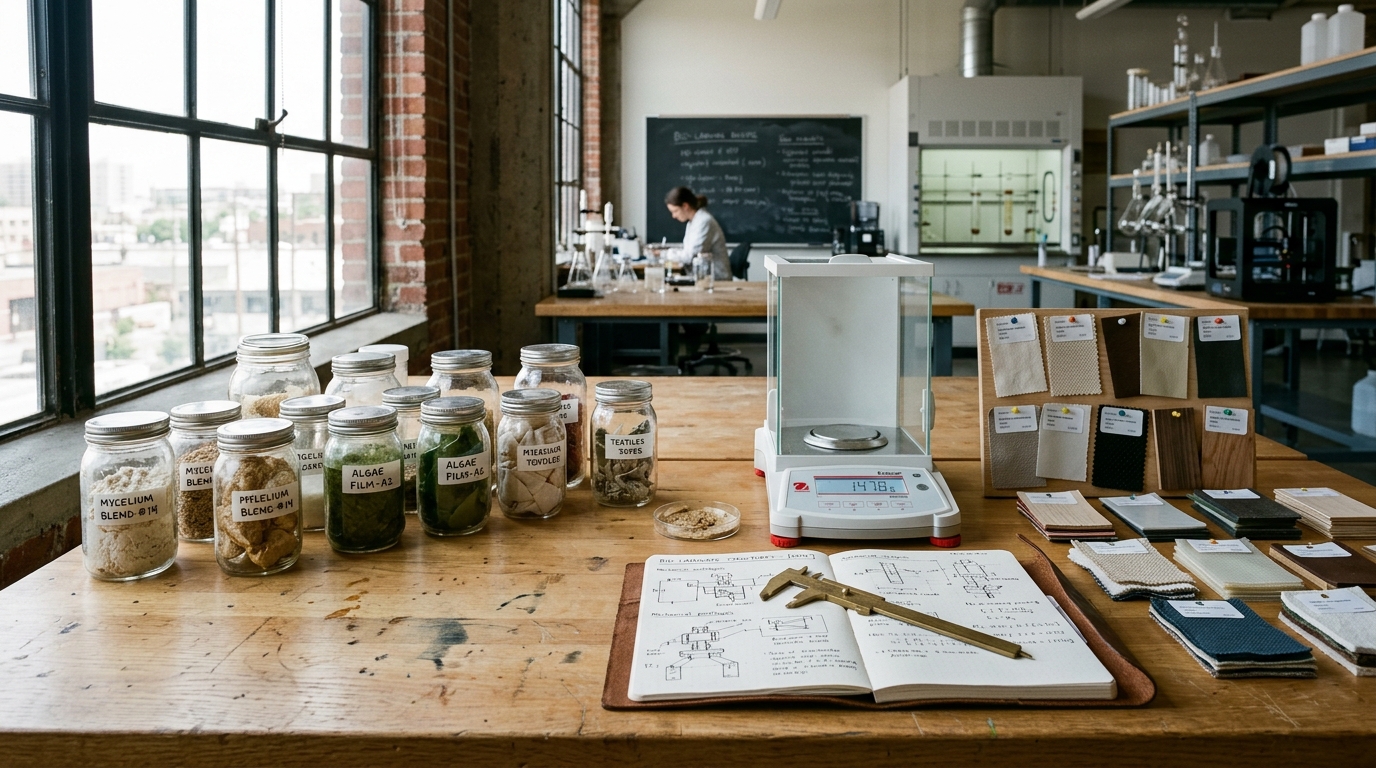
Making a single functional prototype from local agricultural waste, however, takes weeks of messy, physical, unpredictable work.
The Gap Between Intent and Execution
At Sustainability Lab, we observe a persistent divide in the environmental movement:
- The Discourse Layer: Dominated by conferences, roadmap decks, buzzwords, and vague pledges set comfortably thirty years into the future.
- The Physical Reality: The actual materials, fabrication tools, supply chains, and mechanical constraints required to build things people actually use.
Abstract optimism does not solve material challenges. A composite either cures with sufficient tensile strength, or it cracks under load. A binder is either water-resistant and non-toxic, or it fails when exposed to humidity.
Physical reality is an uncompromising editor.
IDEA ──> ABSTRACT MANIFESTO ──> NO ACCOUNTABILITY ──> STAGNATION
  │
  └───> PHYSICAL PROTOTYPE ──> EMPIRICAL FAILURE ──> ITERATION ──> WORKING OUTCOME
Embracing Constructive Failure
When we build prototypes like KĀRVA (SL / 001), early batches fail. Fibers clump unevenly. Press molds warp. Shrinkage calculations prove slightly off.
These “failures” are not setbacks; they are the only reliable source of real data. Every broken test piece teaches us something precise about fiber orientation, binder ratio, and thermal curing cycles that no academic whitepaper could have predicted for our specific local context.
Practicality as an Ethical Obligation
We believe that those working in sustainability have a responsibility to be practical.
- Do not promise what cannot be fabricated.
- Do not celebrate a material until it has survived real-world handling.
- Do not publish conceptual renderings when physical prototypes are needed.
Sustainability Lab exists to bridge the gap between design thinking and physical execution. Ideas are easy. Let’s build what comes next.