Material Intelligence in Practice: Field Observations on Plant Fibers
A direct record from the workshop table on balancing fiber tensile characteristics, natural resin cure curves, and organic mold shrinkage.
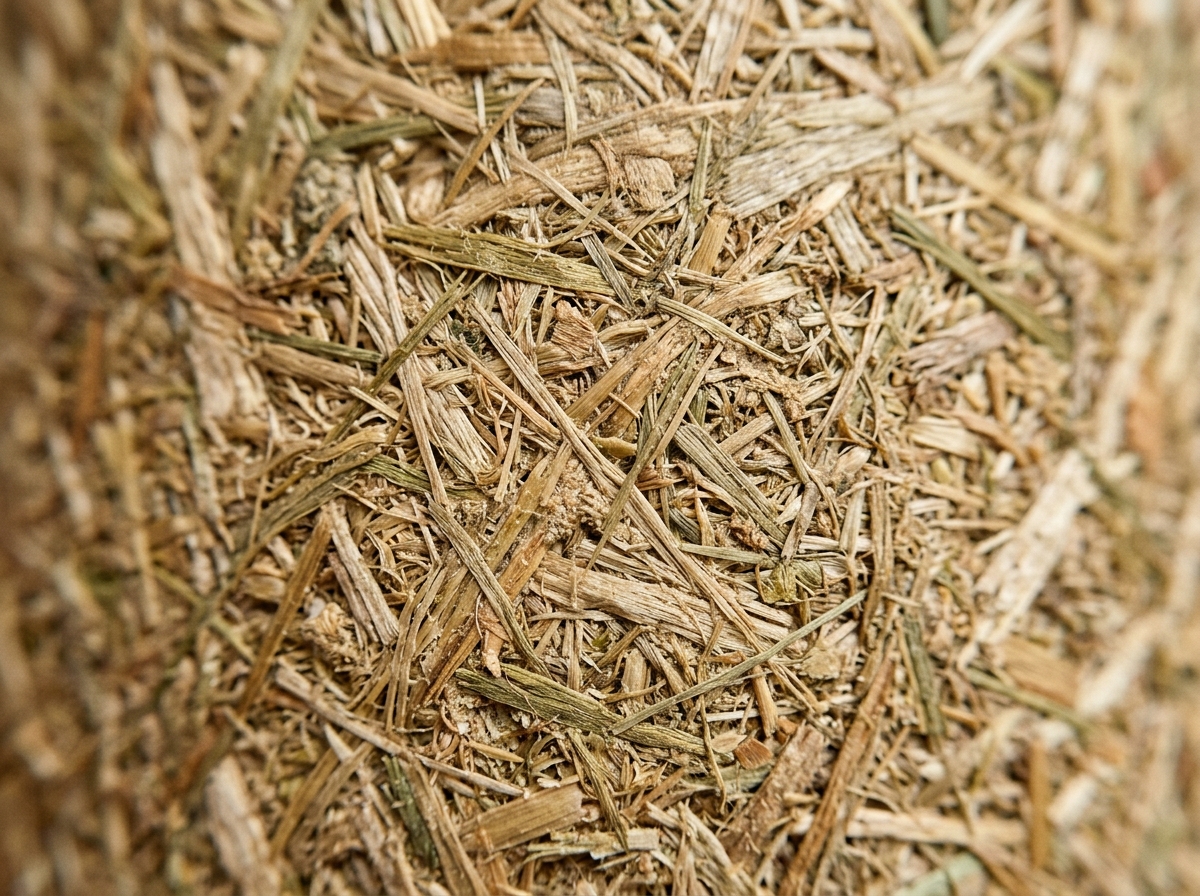
When transitioning from standard petroleum-based industrial design to bio-composite fabrication, conventional design rules break down. Petrochemicals are isotropic, predictable, and forgiving in mold cavities. Plant fibers are living, directional, and reactive to ambient humidity.
Here are four core observations recorded during our development cycles for KĀRVA (SL / 001).
1. Grain and Fiber Anisotropy
In standard injection molding, molten polymer flows into any geometry. In plant fiber layups:
- Tensile strength is directly tied to the primary fiber orientation axis.
- Randomized chop provides isotropic stability at lower peak strengths.
- Aligned long-fiber bundles provide exceptional structural rigidity along primary stress vectors, but require careful corner radiusing to avoid dry spots during binder saturation.
2. The Mechanics of Natural Binders
Synthetic epoxy relies on aggressive chemical crosslinking. Non-toxic bio-binders rely on controlled dehydration and organic crystallization:
[Binder Wet Phase] ──> [Hydraulic Compression] ──> [Capillary Saturation] ──> [Desiccation & Cure]If ambient relative humidity exceeds 70%, cure times double, and internal moisture can cause micro-voiding. We established strict workshop monitoring protocols to standardize ambient temperature and humidity before initiating compression cycles.
3. Tooling and Volumetric Shrinkage
Unlike plastic parts which exhibit minimal and uniform thermal shrink rates, plant-based composites experience volumetric contraction as moisture leaves the cell walls during curing.
To achieve dimensional precision for assembly:
- Tooling must include a calculated 3.2% to 4.8% dimensional allowance depending on fiber blend density.
- Compression pressure must be maintained throughout the early curing stage to prevent delamination.
4. Honoring the Material’s Visual Language
Initial instinct in industrial design is often to paint, sand, or coat organic materials until they mimic plastic or aluminum.
We deliberately chose the opposite path: allowing the fibrous cross-weave, subtle tonal variations, and tactile grain to remain visible. Honest materials establish immediate subconscious trust with the user.